
From Visibility to Revenue: How Digital Marketing Converts Attention into Sales
In today’s digital landscape, visibility alone is not enough. Many businesses have social media pages, run advertisements, and create content, but still struggle to generate revenue. The gap between visibility and actual sales lies in the absence of a structured marketing funnel. Digital marketing in 2026 is not just about attracting attention; it is about converting that attention into measurable business outcomes.
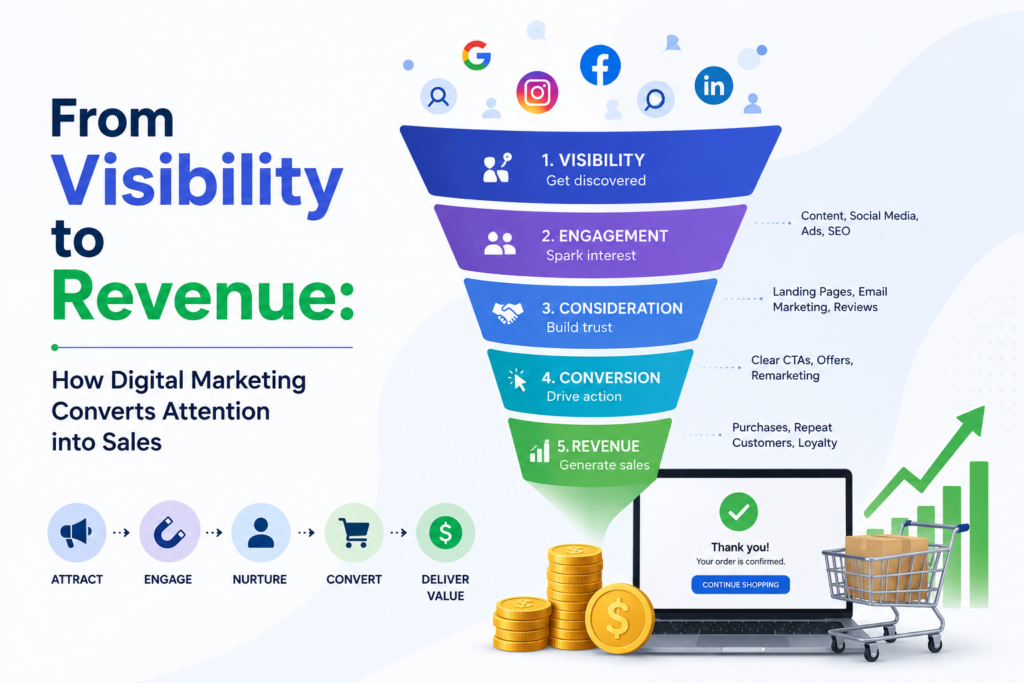
The first stage of this process is awareness. This is where businesses introduce themselves to potential customers through content, ads, or search visibility. However, simply reaching people does not guarantee engagement. The content must be relevant and valuable to the audience. Short-form videos, educational posts, and problem-solving content are highly effective in capturing attention. For startups and personal brands, this stage is crucial for building initial recognition.
The next stage is engagement. Once users become aware of a brand, they need a reason to interact with it. This can be achieved through informative content, storytelling, or interactive formats. Engagement builds familiarity and trust, which are essential before a user makes a purchasing decision. Many businesses fail at this stage because they focus only on selling rather than building relationships with their audience.
Conversion is the most critical stage, where interest is turned into action. This requires a clear and compelling offer, supported by a well-designed landing page or sales process. Factors such as user experience, messaging, and call-to-action play a significant role in determining whether a user converts. In my experience, even small improvements in these areas can lead to substantial increases in conversion rates.
Retargeting is another powerful element that bridges the gap between visibility and revenue. Most users do not convert on their first interaction with a brand. By targeting users who have already engaged with content or visited a website, businesses can increase their chances of conversion. This approach is particularly effective for small businesses with limited budgets, as it focuses on high-intent audiences.
In 2026, successful digital marketing strategies are built around complete funnels rather than isolated activities. Businesses that understand and implement this approach can turn attention into consistent revenue. From my perspective, the key is to guide users through each stage of the journey instead of expecting immediate results from a single interaction